

The joint research on NAD+ conducted by the University of Copenhagen, Northumbria University and the Japanese Society for Anti-Aging released in the world's most authoritative academic journal "Nature".
This study has confirmed that reversing or alleviating the decline of NAD+ can delay aging.
This study employed a systematic approach. In a double-blind, randomized, crossover trial, supplementation with NAD+ increased the total NAD+ concentration in whole blood, leading to an increase in SIRT1 and nicotinamide phosphoribosyltransferase (NAMPT) in peripheral blood mononuclear cells, a reduction in the concentration of pro-inflammatory cytokines in plasma, including a decrease in interleukin 2 (IL2), a reduction in glycosylation of serum proteins and immunoglobulin G (IgG), and a transfer of lactate glycosylation to a younger biological age in the blood.
All of these may promote a healthier aging trajectory.
What is NAD+?
NAD+ is the abbreviation for nicotinamide adenine dinucleotide. It is a coenzyme present in every cell of the body and plays a crucial role in cellular metabolism and energy production.
NAD+ is a molecule composed of two nucleotides, nicotinamide and adenosine. Due to its double-stranded structure, it is called a dinucleotide.

NAD+ naturally exists in the body and is formed from the essential nutrient nicotinic acid (also known as vitamin B3) through a process called the nicotinamide salvage pathway.
Cellular respiration acts as an "electronic carrier", allowing energy-rich molecules (such as glucose) to transfer their electrons to the mitochondria where energy is produced.
This transfer is crucial for the production of ATP (adenosine triphosphate), which is the main source of energy for the human body.
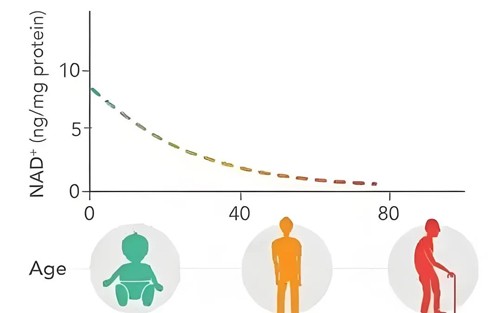
As one ages, the concentration of NAD+ in the body decreases, leading to a decline in energy production and cellular function.
NAD+ (nicotinamide adenine dinucleotide) is a crucial coenzyme within human cells, playing significant roles in maintaining life activities, health, and aging processes.
core role in energy metabolism
NAD+ is a crucial player in intracellular energy metabolism, participating in processes such as glycolysis, the tricarboxylic acid cycle, and oxidative phosphorylation, helping to convert the chemical energy in food into energy that cells can utilize (ATP).
As an electron carrier, NAD+ transfers electrons within the mitochondria, driving ATP synthesis and providing energy support for various physiological activities of the cell.
If the level of NAD+ is insufficient, the efficiency of energy production will decline, which may lead to problems such as fatigue and slowed metabolism.
DNA repair and maintenance of genetic stability
NAD+ is the sole substrate of the DNA repair enzyme PARP (poly(ADP-ribose) polymerase).
When DNA is damaged (such as by ultraviolet rays, radiation, free radicals, etc.), PARP is activated, using NAD+ to synthesize poly(ADP-ribose) (PAR), and recruiting repair proteins to complete the repair of DNA damage.
NAD+ also plays a significant role in cancer prevention and other diseases by activating the Sirtuin protein family, repairing chromatin structure, maintaining genomic stability, and reducing the risk of genetic mutations.
Regulation of Aging and Longevity
The level of NAD+ decreases with age, and it is regarded as one of the key indicators of cellular aging.
NAD+ activates Sirtuin proteins (such as Sirt1, Sirt3, Sirt6, etc.) to regulate gene expression, inhibits cellular aging and apoptosis, extends telomere length, enhances stem cell function, thereby delaying the aging process and prolonging healthy lifespan.
Cardiovascular health protection
NAD+ can promote the repair and regeneration of cardiac cells, improve cardiac function, and reduce the risks of cardiovascular diseases such as heart failure and atherosclerosis.
NAD+ plays a crucial role in maintaining the health of the cardiovascular system by regulating the function of vascular endothelial cells, reducing oxidative stress and inflammatory responses, maintaining vascular elasticity, and promoting blood circulation.
Immune system regulation
NAD+ is involved in the activation, proliferation and migration of immune cells, and regulates the immune response.
NAD+ interacts with enzymes such as CD38 and CD157 to maintain immune balance, enhance the anti-tumor and anti-viral activities of natural killer cells (NK cells), improve the immune defense capacity of the body, and help resist infections and diseases.
Brain health and cognitive function support
NAD+ is crucial for the survival, regeneration and synaptic plasticity of neurons.
NAD+ is involved in the synthesis and metabolism of neurotransmitters, improving the energy metabolism of the brain, protecting neurons from oxidative damage and degeneration, and helping to prevent neurodegenerative diseases such as Alzheimer's disease and Parkinson's disease.
It also enhances memory, concentration, and cognitive functions.
Metabolic Regulation and Weight Management
NAD+ activates Sirtuin proteins, thereby regulating fat metabolism, gluconeogenesis and insulin sensitivity, and helps maintain blood sugar and lipid homeostasis.
NAD+ promotes fat breakdown and oxidation, reduces fat accumulation, and plays a positive role in preventing metabolic diseases such as diabetes and obesity.
Skin health maintenance
NAD+ can promote the repair and regeneration of skin cells, enhance collagen production, improve skin elasticity, and reduce wrinkles and pigmentation.
NAD+ also protects the skin from free radical damage through its antioxidant effect, maintains the skin's barrier function, and makes the skin healthier and younger.