What is NMN?
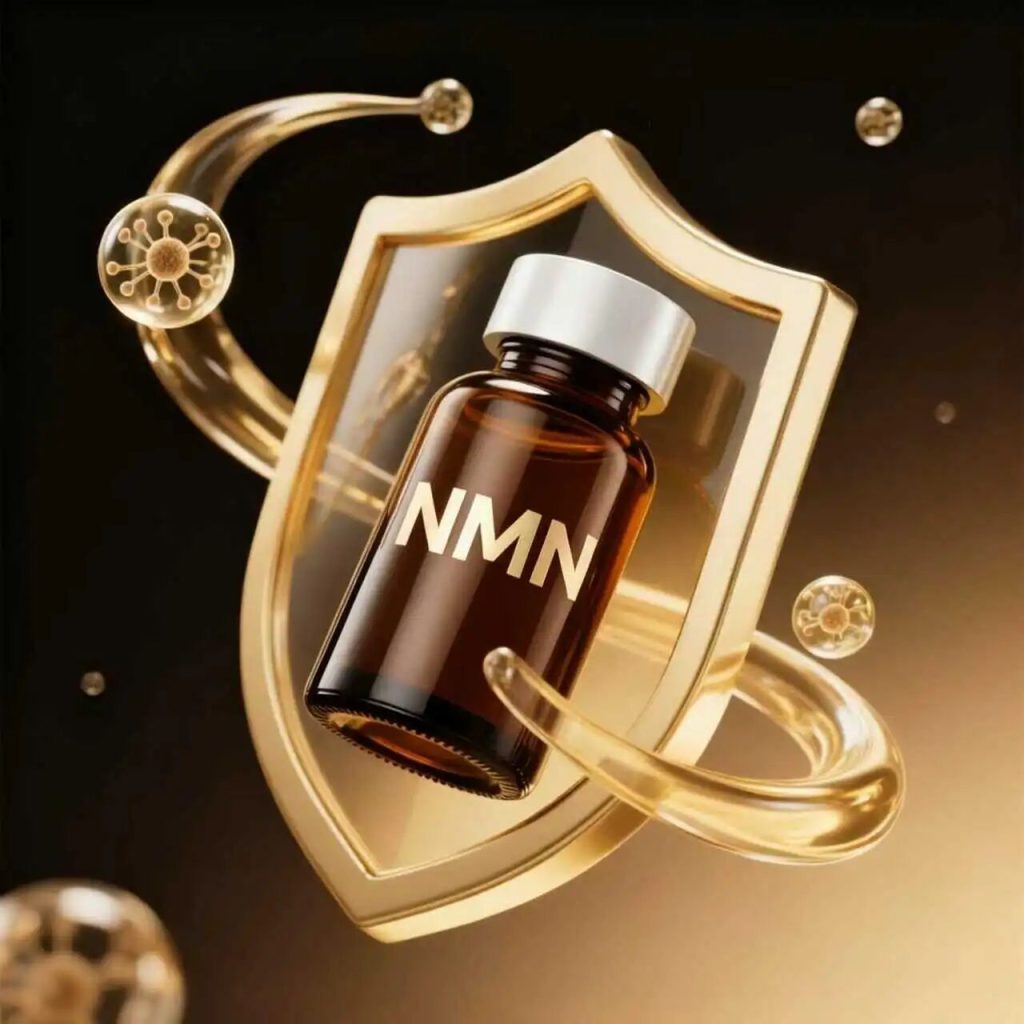
β -nicotinamide mononucleotide (NMN) is a direct precursor of NAD⁺ (coenzyme I).
Its core function is to delay cellular aging and regulate metabolism (such as blood sugar and energy metabolism) by increasing the level of NAD⁺ in the body, activating SIRTUINS longevity proteins, repairing DNA damage, and improving mitochondrial function.
A simple analogy: NAD⁺ is the "energy currency transporter" of cells, and NMN is the "raw material of currency".
Supplementing NMN can make the "energy transport" of cells more efficient and reduce the functional decline caused by aging.
Is nmn a legal dietary supplement?
What is the current situation in Europe, America and China?
current situation and regulations of NMN in Chinese market
1. As a health food
Up to now, no NMN product has obtained the "blue Hat" health food approval number in China.
The State Administration for Market Regulation has not yet approved any health food products with NMN as the main raw material.
2. As a common food
NMN has not been included in the "Food Ingredients Catalogue" or the "New Food Ingredients Catalogue" issued by the National Health Commission.
It is not allowed to be produced, processed or sold as a common food raw material within the country.
All candies, beverages and other products containing NMN produced domestically are in violation of regulations.
3. As a cosmetic raw material
This is currently the only field in China where NMN has a clear compliance path.
NMN has been included in the "Directory of Used Cosmetic Ingredients" and can be used in the production of skin care products, but only for external use and not for oral administration.
At present, the main and legal channel for NMN products to enter the Chinese market is cross-border e-commerce
Mode
Through cross-border e-commerce platforms (such as Tmall Global, JD Worldwide, Kaola Global Shopping, etc.), sales are made directly from overseas (mainly the United States, Japan, Hong Kong, etc.) to domestic consumers in China via "direct mail" or "bonded warehouse delivery" methods.
Policy
This model falls under the category of "personal use" imported consumer goods.
Under the current policy, as long as the place of origin is legal and the goods are registered through cross-border e-commerce platforms, they can be sold.
This is equivalent to opening up a "green channel" for imported products that have not yet obtained domestic food or health product status.
current situation and regulations of NMN in US market
The U.S. Food and Drug Administration (FDA) confirmed that it does not oppose the continued sale of NMN as a dietary supplement.
The core official document is: The FDA's official Response to the "Citizen Petition of the American Natural Products Association".
This response document can be viewed on the U.S. federal government Regulations website Regulations.gov through the Docket number FDA-2022-P-2318.
This petition and all relevant response documents from the FDA can be found.
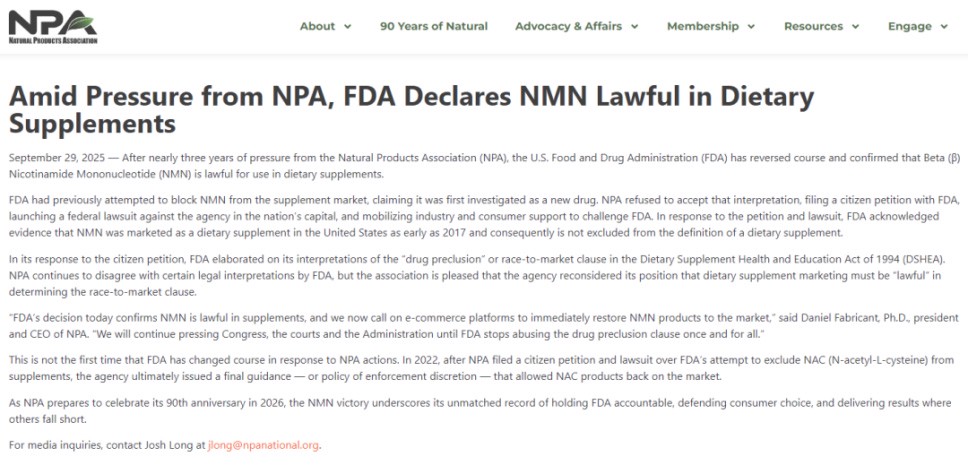
Picture translation
Under pressure from the American Natural Products Association, the FDA announced that NMN is legal in dietary supplements
On September 29, 2025 - Under the continuous pressure from the American Natural Products Association for nearly three years, the U.S.
Food and Drug Administration reversed its stance and confirmed that β -nicotinamide mononucleotide can be legally used in dietary supplements.
The FDA had previously attempted to prevent NMN from entering the supplement market, claiming that it was initially studied as a new drug.
NPA refused to accept this interpretation, submitted a citizen petition to the FDA, filed a federal lawsuit against the agency in the capital, and mobilized industry and consumer support to challenge the FDA.
In response to the petition and lawsuit, the FDA acknowledged that there was evidence indicating that NMN had been sold in the United States as a dietary supplement as early as 2017 and was not excluded from the definition of dietary supplements.
In its response to the citizens' petition, the FDA elaborated in detail on its interpretation of the "drug exclusion" or "market first come" provisions in the Dietary Supplements Health and Education Act of 1994.
The NPA still disagrees with some of the FDA's legal interpretations, but the association is satisfied with the FDA's reconsidering of its position, that is, when the FDA ruled on the "market first" clause, it had held that the marketing of dietary supplements must be "legal".
Dr. Daniel Fabrikent, the president and CEO of NPA, said:
The FDA's decision today confirmed the legality of NMN in supplements. We now call on e-commerce platforms to immediately resume the listing of NMN products.
Pressure will continue to be exerted on Congress, courts and the executive branch until the FDA completely stops the drug abuse exclusion clause. '"
This is not the first time that the FDA has changed its policy due to the actions of the NPA.
In 2022, after the NPA submitted a citizen petition and filed a lawsuit against the FDA for attempting to exclude N-acetyl-L-cysteine from supplements, the FDA eventually issued a final guideline - or discretionary enforcement policy - allowing NAC products to be re-marketed.
As the NPA prepares to celebrate its 90th anniversary in 2026, NMN's victory highlights its unparalleled track record in holding the FDA accountable, defending consumer choice rights, and achieving results when the other party fails.
current situation and regulations of NMN in European market
NMN must not be produced or sold in the European Union as a dietary supplement or food ingredient.
Some enterprises have attempted to launch external NMN products in the form of "cosmetic raw materials", but all oral products are in violation of regulations.
However, consumers can purchase NMN products through cross-border e-commerce platforms (such as from websites in the United States, China, and other places), but this falls under the category of "personal use" and there is a risk of being detained by customs.