

Citicoline is a nucleotide substance with multiple neuroprotective effects. Its mechanism of action includes:
Core mechanism of action
1. Cell membrane stability
As a precursor of phosphatidylcholine, it promotes the repair and regeneration of retinal cell membranes.
Citicoline can stimulate the biosynthesis of neurosphingolipids.
This lipid metabolite helps stabilize the plasma membrane of axons of retinal ganglion cells.
2. Mitochondrial protection
By promoting the synthesis of phosphatidylcholine, it maintains mitochondrial function and energy metabolism.
Phosphatidylcholine is the main phospholipid of the mitochondrial membrane and is involved in the structure, division, metabolism and oxidative phosphorylation of energy production of organelles.
3. Antioxidant stress
Reduce oxidative stress markers (such as malondialdehyde, MDA), and minimize free radical damage.
Citicoline can inhibit the activity of phospholipase A2, thereby reducing tissue inflammation and oxidative imbalance.
4. Neurotransmitter regulation
Enhance cholinergic and dopaminergic neurotransmission.
In the retina, citicoline can increase the level of catecholamines and stimulate the synthesis of dopamine.
5. Antipruritic toxicity
Reduce the apoptosis of nerve cells induced by glutamate.
By upregulating glutamate transporters (such as EAAT2), the damage caused by excitotoxicity to nerve cells can be reduced.
6. Protein homeostasis regulation
The latest research has found that citicoline can stimulate the activity of proteasomes, promoting the clearance of abnormal proteins within cells and maintaining the balance of the protein stability network.
Clinical research evidence
Visual alertness and improvement in working memory:
A randomized controlled study conducted on healthy volunteers revealed:
Medication regimen: Take 500mg of cytidine choline orally per day for 2 consecutive weeks.
Main findings:
There was a significant improvement in mental and motor alertness and visual working memory accuracy (P < 0.01), and a significant reduction in serum oxidative stress marker MDA levels (from 19.11 to 15.63 nmol/mL), while the MDA levels in the placebo group increased significantly instead.
Retinal ganglion cell protection:
Studies in ocular neurodegenerative diseases have shown:
Glaucoma:
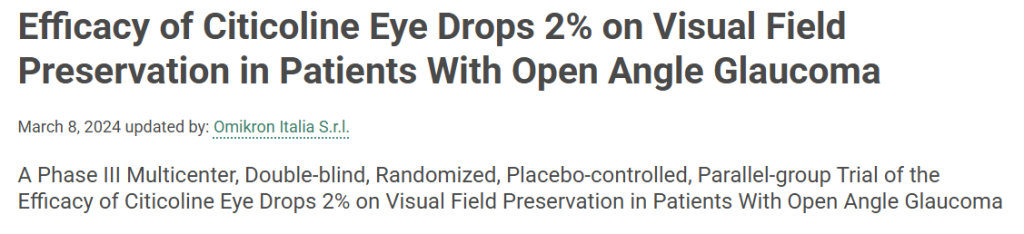
Multiple studies have confirmed that choline phosphocholine can improve the average visual field defect (MD) and slow down the thinning of the retinal nerve fiber layer (RNFL).
An 8-year follow-up study showed that patients treated with cytidine diphosphate choline experienced continuous improvement in retinal and cortical responses.
Ischemic optic neuropathy:
74% of the patients showed improvement in their average visual field defect.
After 6 months of treatment, the overall thickness of the retinal nerve fiber layer (RNFL) remained unchanged or improved in the majority of patients, while the untreated group experienced significant progressive thinning of the RNFL.

Diabetic retinopathy:
When 2% Citicoline Eye Drops combined with Vitamin B12 are used for 36 months, it can significantly protect the function of nerve cells in the macular area and prevent the average sensitivity of the 10-2 visual field from decreasing.
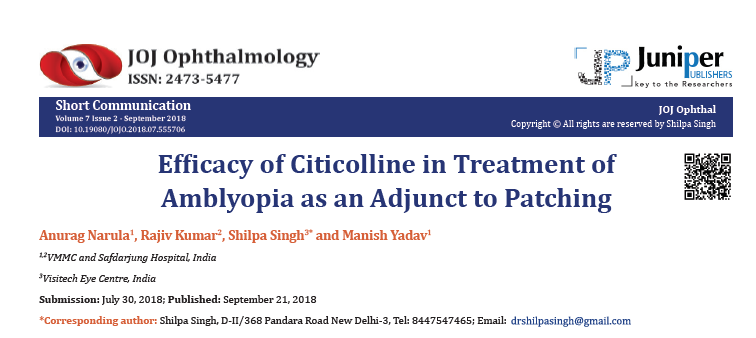
Treatment for amblyopia:
In the treatment of amblyopia, citicoline has shown the potential to improve the retina and the visual pathways behind the retina:
Enhance contrast sensitivity.
Improve visual acuity.
Improve visual evoked potentials.
Enhance the effectiveness of the occlusion therapy.
A study treated 10 patients with amblyopia with intramuscular injection of choline phosphocholine for 15 days.
The result showed that the vision of both eyes improved by 1.4 to 1.5 lines, while the control group only improved by 0.4 lines.
potential benefits of eye strain:
Although there is limited clinical trial data specifically for "visual fatigue", based on its pharmacological properties, citicoline may alleviate visual fatigue through the following pathways:
1. Improve function of visual pathway
Enhance the neural conduction efficiency from the retina to the visual cortex, and improve the speed and accuracy of visual information processing.
2. Reduce oxidative stress
Prolonged eye use can lead to an increase in oxidative stress.
Citicoline can reduce the levels of oxidative stress markers such as MDA, protecting retinal cells from free radical damage.
3. Promote cell membrane repair
Maintaining the integrity of the optic nerve cell membrane and improving the efficiency of light signal transduction are conducive to maintaining visual quality during long-duration visual tasks.
4. Enhance cerebral blood flow
Improving the blood supply to the visual cortex and enhancing the processing capacity of visual information may help alleviate the fatigue caused by increased visual cognitive load.
5. Regulate neurotransmitters
By enhancing the transmission of dopaminergic and cholinergic nerves, it improves visual attention and alertness, which is particularly important in tasks that require prolonged close-range visual use.
Current dosage forms and usage methods
According to the literature, the current administration routes of citicoline are as follows:
Oral formulation: 500 - 1000 mg per day (as dietary supplement or in capsules), suitable for long-term neuroprotection and maintenance of visual function.
Eye drops: 2% Cytoceramide Eye Drops (with liposome formula, enhancing corneal permeability), can directly act on the eyes, with high local concentration and few systemic side effects.
Intramuscular injection: Used for acute treatment, quickly achieving an effective blood drug concentration.
It is worth noting that recent studies have found that after local application of 2% cytidine choline eye drops, complete drug molecules and their metabolites can be detected in the vitreous cavity of the human eye, confirming that this route can achieve effective intraocular neuroprotection.
Conclusion
Citicoline demonstrates promising clinical potential in improving visual function and reducing oxidative stress through its multi-target neuroprotective mechanism.
Although high-quality randomized controlled trials specifically targeting visual fatigue still need to be conducted, based on its protective effects on visual working memory, alertness, and retinal ganglion cells, citicoline can be considered as a potential option for adjunctive treatment of visual fatigue, especially for patients with increased visual cognitive load (such as early cataracts) or early retinal nerve function decline.
Citicoline's role in treating dry eye syndrome and visual fatigue is a recent advancement in recent years.
With the advent of the digital network era, the number of older people patients with dry eye syndrome and visual fatigue has significantly increased, and the older people are an important group among those with neurodegenerative eye diseases.
Therefore, it is extremely important to fully understand the application of citicoline in these two aspects.